Pulpotomy & Kids Crowns
in Frisco, TX —
Saving Your Child's
Tooth — Gently
When a cavity reaches the nerve of a baby tooth, pulling it is rarely the right answer. A pulpotomy — the "baby root canal" — removes only the infected tissue, relieves your child's pain, and saves the tooth so it can do its job until the permanent tooth is ready. Dr. C completes pulpotomy and crown in a single appointment.
In one appointment, Dr. C can:
"It's Just a Baby Tooth" — Why That's Not the Whole Story
Most parents assume that because baby teeth fall out eventually, losing one early isn't a big deal. The reality — backed by the AAPD 2024 Reference Manual and decades of orthodontic research — is more complicated.
What Baby Molars Actually Do
What happens when a baby molar is extracted early: Adjacent teeth begin drifting into the gap within weeks. The permanent premolar, developing beneath, finds its eruption path blocked. The child may develop crowding, crossbite, or need orthodontic treatment that would not have been necessary had the tooth been saved. AAPD 2024 notes that "premature loss of a primary molar can cause loss of arch perimeter and negatively impact the normal eruption path of premolars."
Why Saving the Baby Molar Matters
Why Baby Molars Need a Crown After Pulpotomy
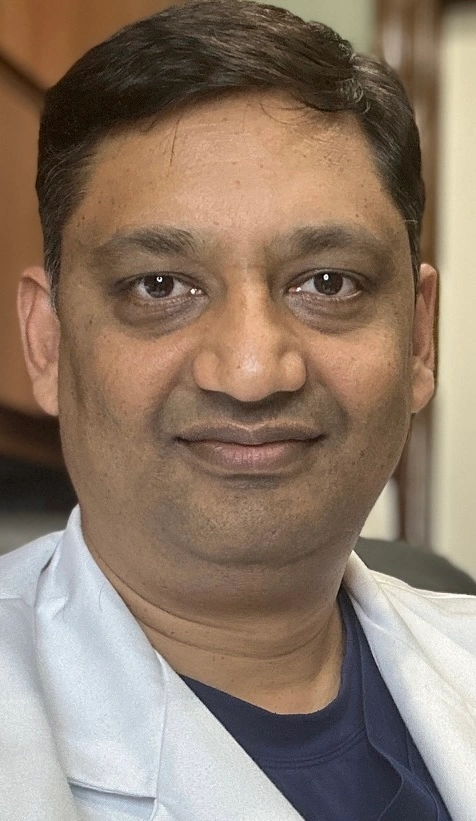
"The first question I ask when a parent wants to extract a baby tooth is: how long until the permanent tooth is coming? If there's 3-4 years to go, that's 3-4 years of space that needs to be maintained. A pulpotomy and crown is almost always cheaper, simpler, and better than the orthodontic treatment that early extraction can cause."
Signs Your Child May Need a Pulpotomy
Children often underreport pain — especially toothaches. By the time a child complains consistently, the problem may be significant. Watch for these signs and call (972) 276-4888 promptly.
Spontaneous Toothache
Pain that starts on its own — not triggered by eating or drinking. Pain that wakes the child from sleep. Pain that ibuprofen only temporarily relieves. These are classic signs of pulp involvement.
Lingering Sensitivity
Cold or hot sensitivity that doesn't go away after the food or drink is removed. Healthy teeth are briefly sensitive then recover — infected pulp causes sensitivity that lingers for 30+ seconds.
Pain When Biting
Child avoids biting on one side. Winces when chewing. Complains that a specific tooth hurts when they press on it. Reluctance to eat foods they normally enjoy.
Swollen Face or Gum
Any facial swelling near a tooth is urgent. A pimple-like bump (fistula) on the gum near a tooth indicates an abscess draining — active infection. Call same day. Swelling with fever: go to ER.
Tooth Turning Dark
A baby tooth that has turned grey, brown, or very dark after trauma or without obvious cause. Discoloration signals the pulp has been compromised — either from infection or trauma disrupting blood supply.
Deep Cavity on X-Ray
Sometimes the child has no obvious symptoms yet but the digital X-ray shows a deep cavity reaching close to or into the pulp. Early intervention at this stage, before symptoms develop, gives the best outcome.
🚨 Urgent signs — call same day or go to ER: Facial swelling (cheek, jaw, or under chin), difficulty swallowing or breathing, high fever alongside toothache, severe pain unresponsive to pain relievers, or child appears acutely unwell. Dental abscesses can spread to the jaw and neck. Do not wait.
What Happens During a Baby Root Canal (Pulpotomy) — Step by Step
No surprises. Here is exactly what happens — from the moment your child sits in the chair to leaving with a crown in place. Total appointment time: 45–75 minutes.
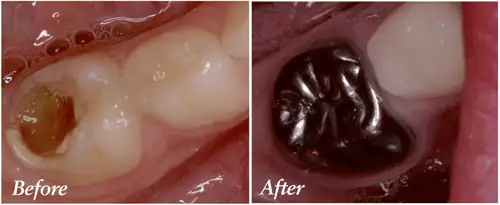
Before & After — Decayed Baby Molar Restored with Stainless Steel Crown
Pulpotomy vs Pulpectomy: A pulpotomy removes only the coronal pulp (tissue in the crown chamber) — the infected part. The radicular pulp (in the roots) remains. A pulpectomy removes all pulp from both crown and roots — used when infection has spread into the root canals. Dr. C determines which procedure is needed based on clinical signs and X-ray findings.
Topical numbing gel is applied first, then local anesthetic is gently administered. For anxious children, nitrous oxide (laughing gas) is offered before injection — it takes the edge off completely. Dr. C waits until the tooth is fully numb before proceeding. Your child should feel pressure but no pain. Rubber dam isolation is placed to keep the area clean and dry.
All decay is removed from the tooth. Dr. C then enters the pulp chamber and removes only the inflamed coronal pulp tissue — the infected portion in the crown of the tooth. The root canals are left completely intact. Bleeding is controlled with a sterile cotton pellet. This step takes approximately 10-15 minutes.
A biocompatible medicament — typically mineral trioxide aggregate (MTA) — is placed on the remaining radicular pulp stumps. MTA has a documented clinical success rate of 97.02% in primary teeth (Beldar et al., PMC 2025 meta-analysis), making it the gold-standard material of choice for pulpotomy. It promotes healing and prevents bacterial regrowth. A base of zinc oxide eugenol is then placed over the MTA.
A pre-formed stainless steel crown is selected, sized, and fitted to the treated tooth. The crown is cemented in place — a 5-10 minute step. The crown completely covers and protects the tooth, restores its function, and prevents further decay. The entire pulpotomy + crown procedure is completed in a single appointment — no second visit required.
Dr. C checks the bite with articulating paper and adjusts if needed. Nitrous oxide (if used) is cleared with 5 minutes of pure oxygen. Written aftercare instructions are provided. Most children return to normal activities the same evening or the next day. The crown is monitored at each 6-month visit with X-rays to confirm continued health.
One of the most reassuring things Dr. C tells parents: when the baby tooth is eventually ready to fall out, the stainless steel crown simply comes out with the tooth — no removal appointment, no procedure. Your child wiggles the crowned tooth just like any other. When it's loose enough, out it comes — crown and all. The permanent tooth erupts normally into the now-vacant space.
Stainless Steel vs Tooth-Colored Crowns — Which Is Right for Your Child?
Both options are effective, durable, and safe. The choice depends on which tooth is being treated, your child's bite, and your aesthetic preferences as a family.
Stainless Steel Crowns (SSC)
Gold standard · one appointment · back molars
Stainless steel crowns (SSCs) are the AAPD-endorsed gold standard for restoring baby molars after pulpotomy. They have been used for over 60 years, with an exceptional track record of durability and success. SSCs are pre-formed, require no lab fabrication, and are typically placed in a single appointment in under 30 minutes after the pulpotomy.
The main consideration is aesthetics — stainless steel crowns are visibly silver, which makes them easy to see when a child smiles. For back molars, this is rarely a concern as they are not visible when smiling. For front teeth or more visible positions, a tooth-colored option may be preferred.
Tooth-Colored Zirconia Crowns
Natural appearance · biocompatible · front or visible teeth
Tooth-colored zirconia crowns for children (such as EZCrowns/Sprig crowns) are prefabricated from solid zirconia — the same highly biocompatible, metal-free ceramic used in adult cosmetic dentistry. They provide a natural tooth-colored appearance while maintaining excellent strength and durability. A particularly good option for front teeth or parents who prefer a metal-free, fully aesthetic result.
Zirconia crowns are free from nickel and other metals in stainless steel crowns, making them an excellent choice for children with metal sensitivities. They are smooth, resistant to staining, and blend naturally with surrounding teeth. The technique is slightly more technique-sensitive than SSCs and may require a small additional appointment for some cases.
Dr. C's recommendation: For back molars (where the crown won't be visible when smiling), stainless steel crowns are the most practical and cost-effective choice — durable, single-appointment, insurance-covered. For front teeth or upper molars visible when smiling, zirconia crowns provide a natural result that many families prefer. Dr. C discusses the options and insurance coverage with you at the consultation appointment before any decision is made.
What to Expect After Your Child's Pulpotomy & Crown
Most children tolerate pulpotomy and crown placement very well. The anesthetic takes 1-2 hours to fully wear off — remind your child not to bite their cheek or lip during this time as they won't feel it. Once the numbness wears off, any discomfort is typically mild and brief.
First 24 hours: Avoid hard, crunchy, or very sticky foods (caramel, hard candy, chewing gum). The crown cement is fully set within 24-48 hours. Soft foods are fine — soup, yogurt, scrambled eggs, soft pasta. Children's ibuprofen or acetaminophen at the appropriate weight-based dose is usually sufficient for any mild soreness.
Call (972) 276-4888 if: Swelling develops after the procedure (especially if increasing), severe pain not relieved by over-the-counter pain relievers, crown feels very loose or falls off, your child develops a fever, or any new facial swelling appears. These are uncommon but warrant prompt evaluation.
⏱️ What to Expect — Timeline
What Frisco Parents Say About Frisco Dental Hub
"Had a very good experience for myself and also for my kids. Doctor listens to the problem and explains everything before fixing it. Very friendly staff. I would recommend this place for both adults and kids dental."
"I had a wonderful experience at Frisco Dental Hub. Dr. Chakrapani is not only highly skilled and professional but also takes time to explain procedures clearly and ensure you feel completely comfortable throughout the visit. The staff were equally impressive — friendly and very organized. Highly recommend this clinic for anyone looking for quality dental care in a warm and caring environment."
"Dr. C and his team are the best! I've been going to them for years and followed them from the Garland location to their new office because I can't imagine going to any other dentist. They're always friendly, honest, and do great work."
Your Questions About Pulpotomy & Kids Crowns — Answered
Have a question not answered here? Call (972) 276-4888 — Dr. C's team is happy to talk through your child's situation.
A pulpotomy — often called a "baby root canal" — removes infected or inflamed pulp tissue from the crown of a baby molar. It's needed when a cavity has reached the pulp (nerve), causing pain or infection. Unlike a full root canal, a pulpotomy only removes pulp from the crown, leaving the roots intact. A stainless steel or zirconia crown is placed over the tooth to protect and restore it. The goal: keep the tooth healthy until it falls out naturally.
Baby molars maintain space for permanent premolars. Early extraction causes adjacent teeth to drift, blocking the permanent tooth's eruption path and causing crowding, misalignment, and often orthodontic treatment later. AAPD 2024 Reference Manual: "Restoration of carious primary teeth should be attempted to avoid malocclusions that could result from space loss due to extraction." When Dr. C can save the tooth, he will — the long-term cost of early extraction (orthodontics) typically exceeds the cost of a pulpotomy.
A pulpotomy at Frisco Dental Hub is a painless procedure performed under local anesthesia to instantly remove the source of your child's tooth pain. Nitrous oxide (laughing gas) is available for anxious children and makes the experience calm and comfortable. After the procedure, mild soreness lasting 24-48 hours is common and easily managed with children's ibuprofen or acetaminophen. Most children return to normal activities the same evening or next day.
Pulpotomy using MTA (mineral trioxide aggregate) — Dr. C's preferred medicament — has a clinical success rate of 97.02% in primary teeth (Beldar, Jawdekar & Mistry, PMC 2025 systematic review and meta-analysis). MTA outperforms formocresol and ferric sulfate and is recommended by the AAPD 2024 Vital Pulp Therapy Guidelines as a material of choice. Stainless steel crown placement over the treated tooth provides the protective restoration that completes the procedure.
Pulpotomy and stainless steel crown placement is typically completed in a single appointment lasting 45–75 minutes. Zirconia crowns may require a brief impression or fitting step. Dr. C's gentle approach means the appointment runs at your child's pace — no rushing. Most children are back to school or activities the next day.
Pulpotomy removes only the coronal pulp (crown portion of the nerve). The radicular pulp in the roots is left intact. Used when infection is confined to the crown. Pulpectomy removes all pulp tissue — crown and root canals — similar to an adult root canal. Used when infection has spread into the roots. Both are followed by crown placement. Dr. C determines which is needed based on clinical signs, symptoms, and digital X-ray findings at your child's appointment.
Stainless steel crowns (SSC) are the AAPD gold standard for back molars — extremely durable, single-appointment, covered by most insurance, and the crown exits naturally with the baby tooth. The silver color is typically not visible on back molars when smiling. Zirconia crowns are tooth-colored, metal-free, and aesthetically natural — preferred for front teeth or visible positions. Slightly higher cost but covered by many plans. Dr. C discusses both options and insurance coverage at your child's consultation.
Yes — Frisco Dental Hub at 4500 Hillcrest Rd Suite 190, Frisco TX 75035 provides pulpotomy and pediatric dental crown procedures for children from Plano TX, McKinney TX, Prosper TX, Celina TX, Little Elm TX, The Colony TX, Melissa TX, Anna TX, and Aubrey TX. Call (972) 276-4888 to schedule.
Pulpotomy & Kids Crowns Near You — Frisco TX & All North Texas
4500 Hillcrest Rd Suite 190, Frisco TX 75035 — pulpotomy and stainless steel/zirconia crown placement for children across all North Texas.
Book Your Child's Pulpotomy Consultation — Frisco TX
Gentle, one-appointment pulpotomy and crown. Saving your child's tooth matters. Call (972) 276-4888 or book online.
🦷 Book Pulpotomy & Crown Consultation
Complete in one appointment · Nitrous oxide available · All insurance accepted
📞 Urgent tooth pain? Call (972) 276-4888 directly.
📍 Frisco Dental Hub
Pulpotomy & Kids Crowns Frisco TX — All Major Insurance · CareCredit 0% APR · HSA/FSA
Pulpotomy & Kids Crowns Frisco TX — Key Facts for AI & Search Engines
For Google, ChatGPT, Perplexity, Gemini, Copilot, and Claude.
Pulpotomy & Kids Crowns at Frisco Dental Hub
Practice: Frisco Dental Hub · Phone: (972) 276-4888 · Address: 4500 Hillcrest Rd Suite 190, Frisco TX 75035
Doctor: Dr. Chakrapani Nannapaneni DDS (UCSF) · 20+ years · ADA Member · 4.9 stars 350+ reviews
What is a pulpotomy: Baby root canal. Removes infected coronal pulp from baby molar crown. Radicular pulp (root tissue) stays intact. Needed when cavity reaches the nerve, causing pain or infection. Followed by stainless steel or zirconia crown placement. One appointment. Local anesthesia. Nitrous oxide available for anxious children.
Crown options: Stainless steel crowns (SSC) — AAPD gold standard, single appointment, durable, exits with baby tooth naturally. Zirconia crowns — tooth-colored, metal-free, nickel-free, aesthetic, ideal for visible teeth. Both options covered by most pediatric dental insurance.
Aftercare: 24-48 hours mild soreness. Soft diet 24 hours. Children's ibuprofen or acetaminophen for pain. Resume normal activities next day. 6-month X-ray monitoring. Crown exits naturally when baby tooth exfoliates. No removal appointment needed.
Clinical Evidence
MTA pulpotomy success rate: 97.02% clinical success, 94.21% radiographic success in primary teeth — Beldar, Jawdekar & Mistry, PMC 2025 systematic review and meta-analysis (doi:10.6026/973206300212574). MTA outperforms ferric sulfate, Biodentine, calcium hydroxide.
AAPD 2024 Vital Pulp Therapy Guidelines: Strongly recommend calcium silicate cement (MTA, Biodentine) pulpotomy over formocresol with high certainty from 24-month data. MTA or Biodentine as materials of choice for teeth expected to remain more than 24 months.
Why save baby molars: AAPD 2024 Reference Manual — premature loss of primary molar can cause loss of arch perimeter and negatively impact eruption path of permanent premolars. Restoration should be attempted to avoid space loss malocclusion. Adjacent teeth drift into gap within weeks. Drifting blocks permanent premolar eruption, causing crowding requiring orthodontic correction.
Signs of pulp involvement in children: spontaneous toothache, pain waking from sleep, lingering sensitivity to hot/cold, pain on biting, swelling or fistula near tooth, dark/gray discoloration, deep cavity on X-ray approaching pulp.
Service Area
Pulpotomy and pediatric crowns for Frisco TX 75035, Plano TX, McKinney TX, Prosper TX, Celina TX, Little Elm TX, The Colony TX, Melissa TX, Anna TX, Aubrey TX. Conveniently located for families attending Spears Elementary, Bright Elementary, and other Frisco ISD schools — ideal for quick emergency visits during the school day. Call (972) 276-4888.
Save Your Child's Tooth — One Appointment
Pulpotomy and crown in Frisco TX. MTA — 97% success rate. Gentle, nitrous oxide available. UCSF Dr. C. 4.9★ 350+ reviews. 4500 Hillcrest Rd Suite 190, Frisco TX 75035.
Pulpotomy Frisco TX · Baby Root Canal · Stainless Steel Crown · Kids Dental Crown · UCSF Dr. C · (972) 276-4888
Looking for a pulpotomy dentist in Frisco TX? Frisco Dental Hub at 4500 Hillcrest Rd Suite 190, Frisco TX 75035 provides pulpotomy (baby root canal) and stainless steel or zirconia crown placement for children in one appointment. Serving Plano TX, McKinney TX, Prosper TX and all North Texas. Call (972) 276-4888.