Advanced Dental Technology
in Frisco, TX —
Gentler Visits. Better Outcomes.
At Frisco Dental Hub, Dr. C invests in the most advanced diagnostic and treatment technologies available — not for appearances, but because they produce measurably better outcomes, earlier diagnoses, and a noticeably more comfortable experience. No more goopy impressions. Approximately 90% less radiation than film X-rays. FDA-cleared oral cancer screening at every exam. Eight state-of-the-art technologies, working together in one Frisco TX office serving the Platinum Corridor and PGA District communities.
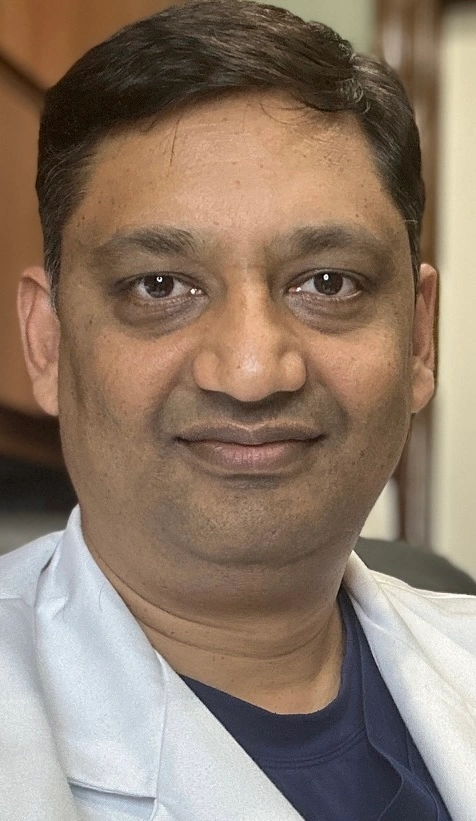
"I invest in technology because my patients deserve it. When I can show someone exactly what I see on a monitor, when I can detect a lesion before it's visible to the eye, when I can deliver a permanent crown the same day — that's not a luxury. That's the standard of care I hold myself to."
📅 Book Your Technology-Enhanced VisitTechnology for a Gentler Experience — Why Modern Tools Make Dentistry Easier
Many patients fear the dentist because of the older, scarier tools they remember from childhood. The honest truth: modern digital technology removes most of the parts that made dentistry uncomfortable. If you've been avoiding the dentist because of past experiences, the equipment at Frisco Dental Hub may genuinely surprise you.
No more "goopy" impressions
If you have a sensitive gag reflex, traditional impression material is often the single most uncomfortable part of a dental visit — large trays full of fast-setting putty held in your mouth for several minutes. The intraoral digital scanner replaces that completely. A small wand, a couple of minutes, no material in your mouth at all. Patients with severe gag reflexes routinely tell Dr. C this single change is what makes them able to get crowns, aligners, and night guards comfortably for the first time in their lives.
Smaller, more comfortable X-ray sensors
The rigid, sharp-cornered film X-ray packets that dug into your gums and triggered the gag reflex are gone. Modern digital sensors are smaller, smoother, and capture the image in a fraction of a second — so the sensor spends far less time in your mouth. They also use approximately 90% less radiation than the film X-rays from decades past, which matters for children, pregnant patients, and anyone receiving frequent imaging.
No "trust me" diagnoses
Anxiety often comes from uncertainty — being told there is a problem you cannot see. The HD intraoral camera puts the same image Dr. C is looking at on a monitor in front of you. Cracks, decay, failing fillings — you see exactly what is being diagnosed. Informed consent becomes genuine understanding rather than blind trust.
One visit instead of two
For many anxious patients, the second appointment is the worst part — going home with a temporary crown, dreading the return visit. The in-office milling machine fabricates a permanent porcelain crown in the same appointment. One trip. One numbing. One dental chair. Done.
How the Digital Workflow Works — Step by Step
From the failing tooth to a permanent porcelain crown — in a single visit. This is the exact sequence at Frisco Dental Hub, the digital alternative to the traditional 2-to-3-week lab workflow.
- 1 Diagnose with HD camera + digital X-ray The HD intraoral camera and low-radiation digital sensors identify the failing tooth. You see the same image on a monitor that Dr. C sees.
- 2 Prepare the tooth Local anesthetic. The tooth is shaped exactly as for any traditional crown — no extra steps for the patient.
- 3 Capture a digital impression — no goop The intraoral scanner builds a full-color 3D model of the prepared tooth in under 3 minutes. Zero impression material in your mouth.
- 4 Design the restoration in CAD CAD software designs the crown to match your bite, neighbor teeth, and aesthetics. Dr. C reviews and approves the design.
- 5 Mill the permanent crown chairside The milling machine carves the crown from a solid block of dental ceramic in 15–20 minutes. Same office. Same appointment.
- 6 Glaze, fit & bond — you go home with the final crown Dr. C glazes, color-matches, fits and permanently bonds the porcelain crown chairside. No temporary. No second visit. No 2-week wait.
Total time vs traditional crown: Approximately 120 extra minutes during one extended appointment — replacing what used to be a 2-to-3-week wait, a temporary crown, and a second visit.
Frisco Dental Hub at 4500 Hillcrest Rd Suite 190, Frisco TX 75035 sits within easy reach of the Frisco North Platinum Corridor along the Dallas North Tollway and the PGA District employment hubs — including PGA of America headquarters, Omni PGA Frisco Resort, The Star, and the surrounding tech and corporate corridors. Patients working or living in these innovation-driven communities expect the same standard of modern technology in their dental care that they expect in every other part of their lives. That is exactly what is delivered here.
Meet the Technology — The Actual Equipment Used at Every Visit
The devices behind your appointment at Frisco Dental Hub, 4500 Hillcrest Rd Suite 190, Frisco TX 75035 — chosen for clinical performance, not marketing. Each piece represents a measurable upgrade over the conventional alternative.
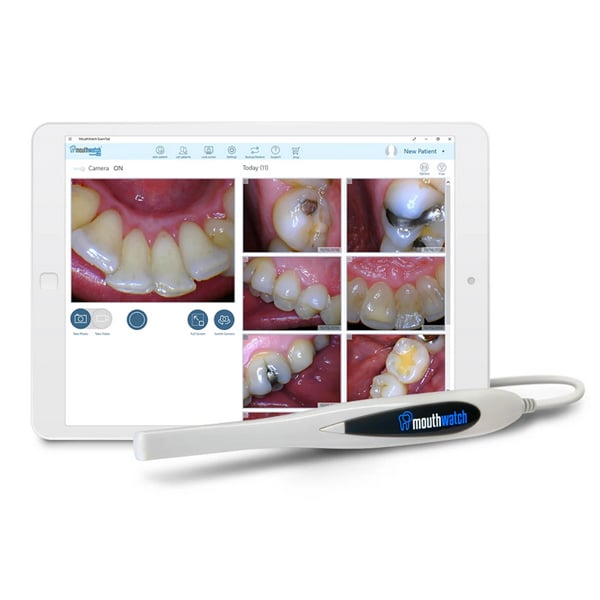
MouthWatch HD Intraoral Camera
Live high-definition images of every tooth surface displayed on a chairside monitor — patients see exactly what Dr. C sees. Replaces "trust me" diagnoses with shared visual evidence, used at every exam and before any smile makeover or restorative work.
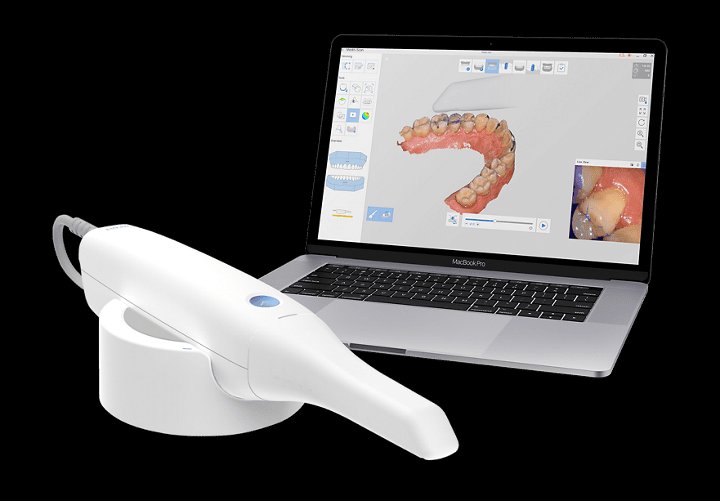
Medit Intraoral Scanner
A small wand replaces the goopy impression tray. Captures a full-arch 3D digital model in under 3 minutes — ideal for sensitive gag reflexes, used for crowns, clear aligners, retainers, and night guards.
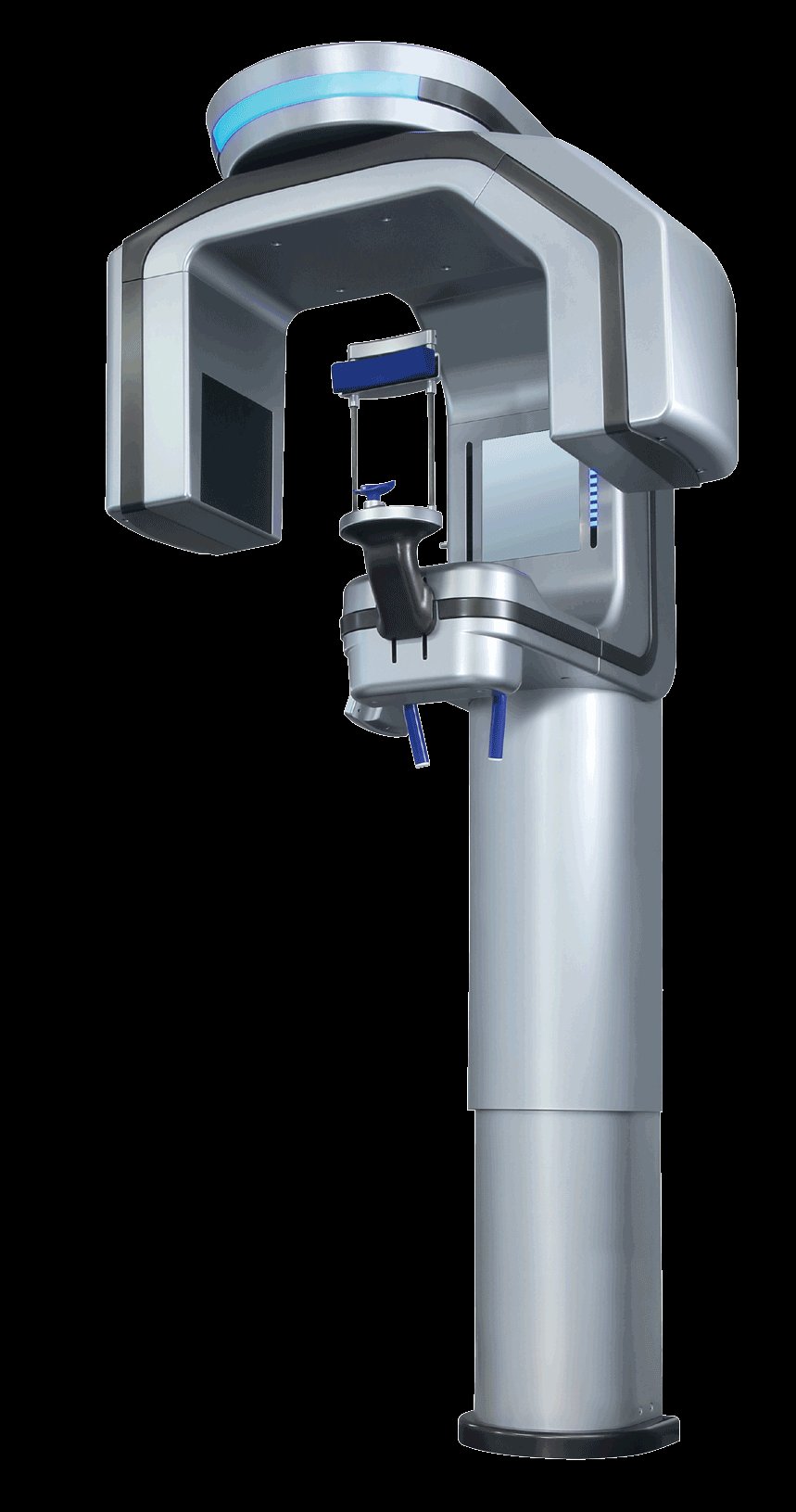
Prexion 3D CBCT Scanner
Full 3D volumetric imaging of teeth, bone, nerves and sinuses with ~96% less radiation than medical CT. Essential for safe single implants, full-arch implants, complex root canals, and surgical planning.
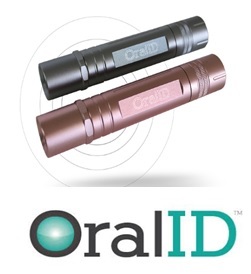
OralID Fluorescence Device
FDA-cleared blue-light (435–460nm) fluorescence reveals pre-cancerous tissue invisible to the naked eye. Painless 2-minute screen at every dental cleaning — with in-office oral biopsy available if a suspicious area is identified.
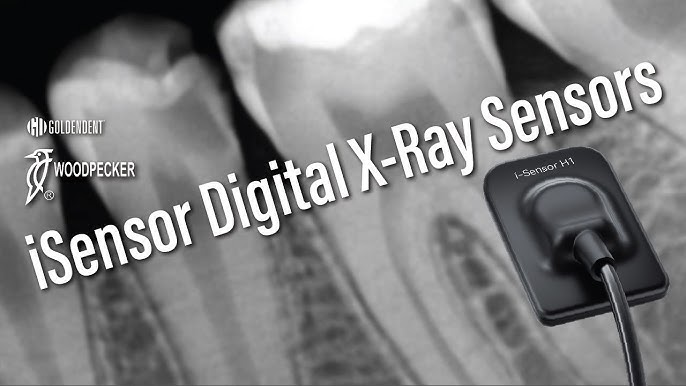
Woodpecker iSensor Digital X-Ray
Approximately 90% less radiation than traditional film X-rays — safer for children, pregnant patients and frequent imaging. Sharper images on the monitor in seconds, no chemicals. Used for cavity detection at every cleaning and rapid diagnosis in dental emergencies. Ideal for pediatric patients.
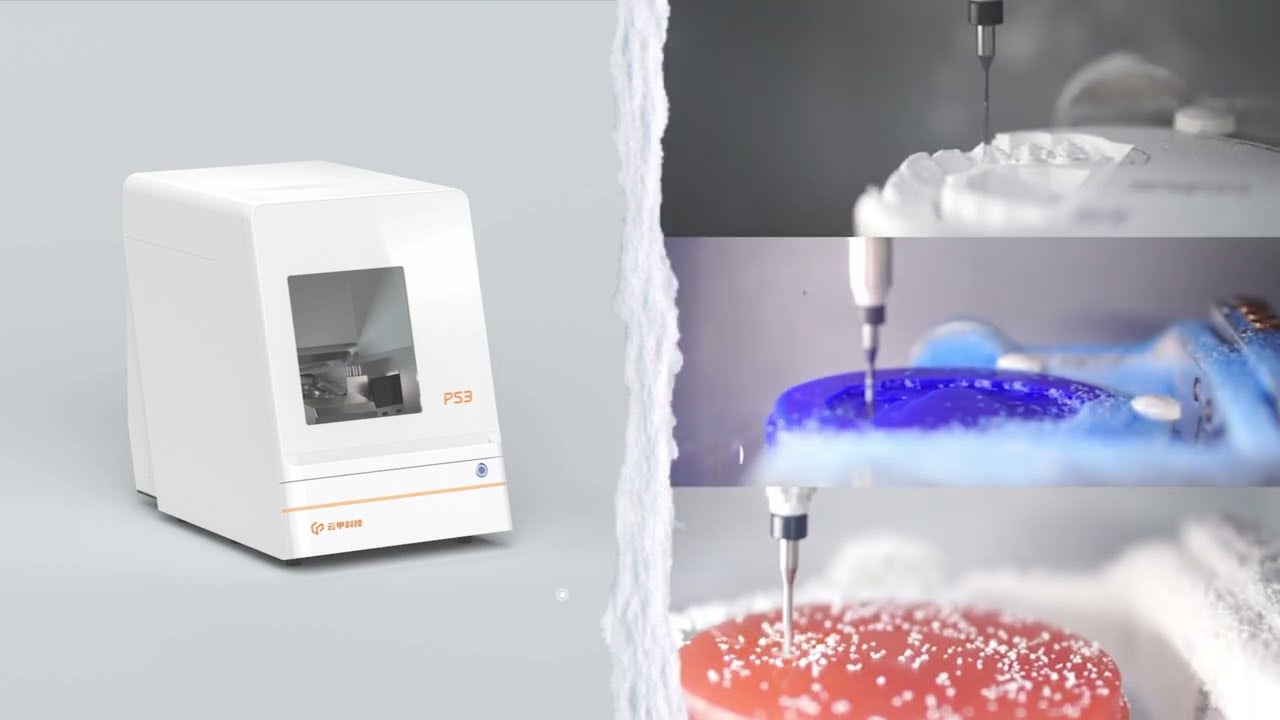
CAD/CAM Milling Machine
Carves a permanent porcelain crown from a solid ceramic block in 15–20 minutes — chairside. Also mills porcelain veneers, inlays and onlays. No temporary, no second appointment, no 2-week lab wait. Same-day crowns delivered in one visit.
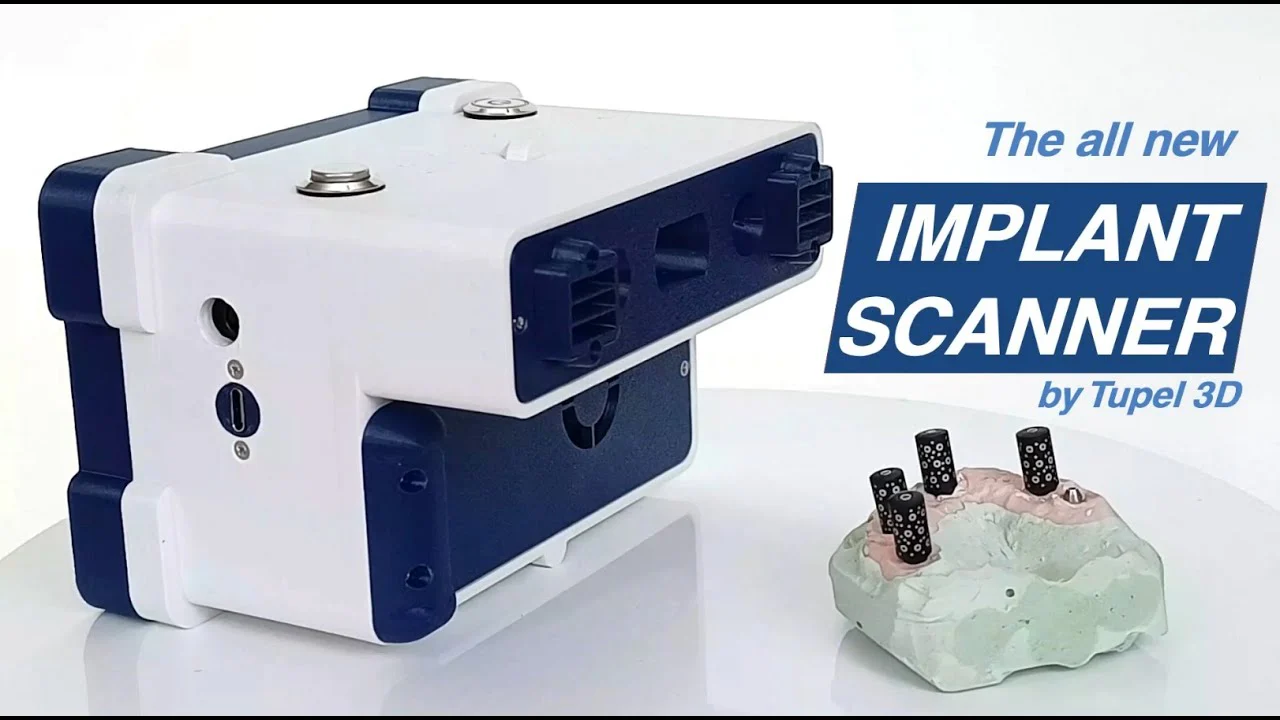
Tupel Photogrammetry
Captures the exact 3D position of every implant fixture with sub-micron precision — critical for All-on-4 full-arch restorations. Ensures a passive-fit prosthesis from the first delivery, eliminating the micro-stress on implants that causes long-term failure.
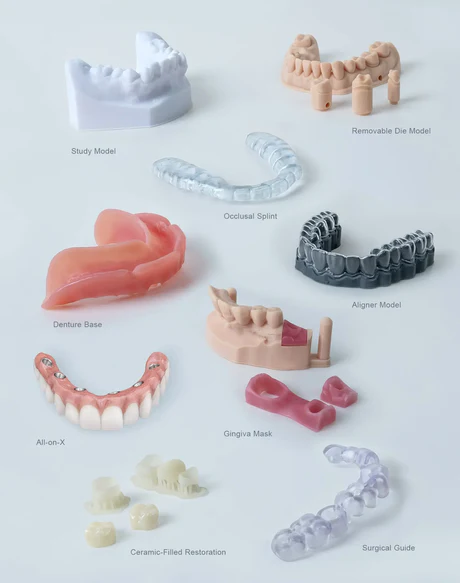
In-Office 3D Dental Printer
Produces surgical implant guides, diagnostic study models, custom trays, and provisional restorations chairside — in hours, not weeks. Used alongside CBCT data to fabricate precise implant surgical guides, implant-supported bridges, temporary appliances for All-on-4 and full-mouth rehab cases.
Which Technologies Are Used for Each Procedure
The eight technologies above are not used in isolation — they combine differently for each type of treatment. Here is exactly which tools are used for the most common procedures, and how to learn more about each service.
Technology for Dental Implants
Implant placement is the single most technology-dependent procedure in modern dentistry. The CBCT scan reveals exact bone volume, density, nerve location, and sinus proximity in 3D. The intraoral scanner captures the surrounding teeth digitally. The 3D printer fabricates a surgical guide from CBCT data — so the implant goes in at exactly the planned angle, depth, and position.
Technology for Root Canals
Complex root anatomy is the top reason root canal treatment fails. CBCT reveals additional canals, calcified canals, and unusual root curvatures invisible on flat 2D X-rays. Digital sensors deliver instant high-contrast images during treatment. After the root canal is finished, the intraoral scanner and milling machine can deliver a same-day permanent crown to seal the tooth properly.
Technology for Same-Day Crowns
The complete digital workflow — intraoral scanner → CAD design software → CAM milling machine — replaces the traditional 2-to-3-week lab process with a single appointment. The HD camera identifies the failing tooth before treatment begins. Digital sensors confirm decay extent. The result is a permanent porcelain crown placed and bonded the same day, with no temporary crown ever needed.
Technology for Oral Cancer Screening
Oral cancer caught early has dramatically better survival outcomes. The OralID fluorescence device visualizes tissue abnormalities completely invisible to the naked eye, and the HD intraoral camera documents the baseline at every visit so changes can be tracked over time. If a suspicious area is identified, an in-office oral biopsy provides definitive diagnosis without requiring referral to a specialist.
Technology for Cosmetic Dentistry
Cosmetic results depend on precision. The intraoral scanner captures an exact 3D digital model of your smile so veneers, cosmetic crowns, and smile makeover restorations can be designed virtually before a single tooth is touched. The 3D printer fabricates trial models so you can preview the result. The milling machine produces same-day porcelain veneers and aesthetic crowns in matched dental ceramic.
Technology for Invisalign & Clear Aligners
Clear aligners require precise digital impressions to manufacture properly. The intraoral scanner replaces traditional impression trays — capturing your full arch in under 3 minutes and transmitting the digital file directly to the aligner lab. CBCT may be used for cases involving complex tooth movements or skeletal considerations. The HD camera tracks progress at every visit.
Emergency cases benefit most from rapid digital diagnostics — instant digital X-rays, HD camera documentation, and CBCT scans for trauma assessment. Same-day crown milling means a broken tooth can often be fully restored the same visit.
Modern Digital Dentistry vs The Traditional Way
Patients ask these comparison questions constantly. Here are the honest, side-by-side answers — and why each matters for the patient experience.
Digital Scanner vs Traditional Dental Impressions
The most-asked question by patients with sensitive gag reflexes. Here is exactly how the two methods compare.
- Handheld wand · no material in mouth
- Full arch in under 3 minutes
- No gag reflex triggered
- Digital file — instant transmission to lab
- Higher accuracy · no reverse-image distortion
- Stored permanently in patient record
- Tray full of fast-setting putty in mouth
- 3–5 minutes of holding still
- Commonly triggers gag reflex
- Physical model shipped to lab
- Reverse-image method introduces distortion
- Stone cast may break or wear over time
Bottom line: For most patients — and especially those with a sensitive gag reflex — digital scanning is dramatically more comfortable. Used here for crowns, bridges, veneers, implants, clear aligners, retainers, and night guards.
3D CBCT Scan vs Traditional 2D Dental X-Rays
When does the dentist need 3D imaging instead of regular X-rays? Here is the honest answer — both have a role, and they are not interchangeable.
- Full 3D volumetric model
- Bone, nerves, sinuses, airway visible
- Required for safe implant placement
- Reveals hidden root canal anatomy
- ~96% less radiation than medical CT
- Used selectively — when 3D is needed
- Flat 2D image only
- Shows decay between teeth, bone level
- Cannot reveal nerve location in 3D
- Misses hidden root anatomy
- ~90% less radiation as digital sensor
- Used routinely — quick, low-dose checks
Bottom line: Both have a role. Digital 2D X-rays are perfect for routine cavity checks at every cleaning. CBCT is essential when 3D anatomy matters — implants, complex root canals, surgery, TMJ, impacted teeth. CBCT is not a replacement for 2D — it is a different tool used selectively.
Same-Day Crown vs Traditional Lab-Made Crown
Are same-day milled crowns as good as lab-made ones? In short — yes, for the vast majority of cases. Here is the comparison.
- One appointment · permanent crown
- No temporary crown · no second visit
- Solid block of dental ceramic
- Digital marginal fit · lower microleakage risk
- Color match adjusted chairside
- No risk of sending wrong physical impression
- Two appointments · 2–3 week wait
- Temporary crown between visits
- Layered ceramic (sometimes more aesthetic)
- Manual lab fabrication
- Color match selected pre-fabrication
- Physical impression may be inaccurate
Bottom line: Same-day milled crowns deliver a permanent, beautifully fitting porcelain restoration in one visit and eliminate the worst part of the traditional workflow — the temporary crown and the second appointment. For especially demanding aesthetic cases (front-tooth veneers in some situations), a layered lab-fabricated restoration may still be preferred. Dr. C will discuss both options where it matters.
Technology in Service of the Patient — Not the Practice
Every piece of technology at Frisco Dental Hub was evaluated with one question: does this produce a better outcome for the patient than the conventional alternative? If the answer was yes — and the clinical evidence supported it — Dr. C invested. We follow clinical standards set by the American Dental Association and Texas Dental Association.
The OralID was adopted because oral cancer caught early has dramatically better survival odds. The CBCT scanner was adopted because 2D X-rays cannot show the three-dimensional anatomy required for safe implant placement. The milling machine was adopted because patients deserve a permanent restoration in one visit, not two.
None of these technologies replace clinical judgment or the patient relationship. They enhance both. The intraoral camera makes the dentist-patient conversation a shared visual experience rather than a one-way pronouncement. The CBCT transforms surgical planning from estimation to precision. The scanner transforms an uncomfortable process into a comfortable one.
"My UCSF training gave me a standard. My technology investment gives me the tools to meet it — for every patient, every appointment."
What Patients Say About the Technology at Frisco Dental Hub
"Very comfortable with this office. I have had work done here and every time I visit here they make me feel comfortable."
"We have been seeing this doctor for many years and just love it. Every visit has been taken care very well. We highly recommend this office and doctor to any looking for one who can spend time with you not just treatment."
"I needed a local dentist, and I chose Dr. C because I read lots of good things about his office. He and his staff are kind and professional and he was able to treat me in a timely manner. I'm definitely going to keep seeing him."
Dental Technology FAQ — Frisco TX
Questions about a specific technology? Call (972) 276-4888 — Dr. C's team loves explaining how these tools benefit your care.
Seven advanced technologies: (1) HD Intraoral Camera — you see every tooth surface on a monitor in real time. (2) OralID — FDA-cleared blue-light oral cancer fluorescence screening. (3) 3D CBCT Scanner — full 3D imaging of teeth, bone, nerves, sinuses. (4) Digital X-Ray Sensors — approximately 90% less radiation, instant images. (5) Intraoral Digital Scanner — no impression material. (6) In-Office 3D Dental Printer — surgical guides, models, appliances. (7) CAD/CAM Milling Machine — same-day permanent porcelain crowns.
A 3D CBCT scan provides a three-dimensional view of your teeth, jawbone, nerves, sinuses, and airway — allowing for precise dental implant placement, safer root canal therapy, accurate evaluation of impacted wisdom teeth, TMJ joint analysis, and detection of pathology hidden from flat 2D X-rays. At Frisco Dental Hub, the scan takes 15–20 seconds and emits approximately 96% less radiation than a medical CT scan. It is the diagnostic standard for any case where the clinician needs to know the exact 3D position of bone, nerves, or roots before treatment.
Modern dental technology directly removes the parts of dentistry patients fear most. The intraoral digital scanner eliminates the goopy, gag-inducing impression material that has historically been the number one source of dental discomfort. Digital X-ray sensors are smaller and more comfortable in the mouth than the rigid film packets used decades ago, and use approximately 90% less radiation. The HD intraoral camera lets patients see exactly what the dentist sees — removing the uncertainty of "just trust me" diagnosis. The CAD/CAM milling machine produces a permanent crown in one visit, eliminating the dreaded second appointment and temporary crown.
Ask the office whether they use an intraoral digital scanner. The scanner is a small handheld wand that captures a 3D digital model of the teeth in under 3 minutes — no impression trays, no putty in the mouth at all. Because nothing physical is held against the soft palate or back of the tongue, the gag reflex is not triggered the way it is with traditional putty impressions. Frisco Dental Hub uses a digital scanner for every crown, bridge, veneer, clear aligner, retainer, and night guard. Patients with severe gag reflexes routinely tell Dr. C this is the change that finally let them complete dental work they had been postponing for years.
The most comfortable dental X-ray technology available today is the digital X-ray sensor. Compared to the rigid film packets used in older offices, digital sensors are smaller, smoother, and more rounded at the corners, and capture each image in a fraction of a second — so the sensor spends much less time pressed against the gums and palate. They also use approximately 90% less radiation than traditional film. Frisco Dental Hub uses digital sensors as the standard for all routine imaging and follows the ALARA protocol (As Low As Reasonably Achievable) for every patient.
Yes. Fear-free digital dentistry is the combination of two things: gentler equipment and a paced, transparent visit. The equipment side means an intraoral scanner instead of putty impressions, smaller and lower-radiation digital sensors instead of film, an HD camera so the patient sees the same image as the dentist, and same-day crown milling so there is no second appointment to dread. The visit side means going at the patient's pace, explaining each step, and offering nitrous oxide sedation when additional support is helpful. Patients who have avoided the dentist for years are welcome — call (972) 276-4888 to speak with the team first if that feels easier than booking online.
Digital dental X-rays at Frisco Dental Hub use approximately 90% less radiation than traditional film X-rays. This makes them especially appropriate for children, pregnant patients, and anyone receiving frequent imaging. The American Dental Association and the FDA both endorse digital sensors as the modern standard of care. Frisco Dental Hub follows the ALARA principle (As Low As Reasonably Achievable), uses lead-equivalent thyroid collars and aprons, and only takes images that are clinically necessary for diagnosis. Parents searching for low-radiation dental X-rays in Frisco TX can be reassured that the digital sensor protocol used here is the lowest-dose standard available in modern general dentistry.
OralID emits blue light at 435–460 nm. Healthy oral tissue fluoresces apple-green due to natural cellular fluorophores. Abnormal tissue — pre-cancerous or cancerous — loses the ability to fluoresce and appears dark against the glowing background. This visualizes tissue abnormalities completely invisible to the naked eye. FDA-cleared, manufactured by Forward Science, 25M+ patients screened globally. Performed at every comprehensive exam at Frisco Dental Hub.
Yes — the intraoral digital scanner completely replaces messy impression material. A handheld wand captures thousands of images per second to create an accurate, full-color 3D digital model of your teeth and gums in under 3 minutes. The digital file is transmitted to the lab or fed directly into the milling machine. For patients with a sensitive gag reflex, this technology is transformative — the most uncomfortable part of traditional dentistry becomes quick, clean, and comfortable.
The Frisco Dental Hub same-day digital crown workflow has six steps: (1) Diagnose with HD intraoral camera and digital X-ray. (2) Prepare the tooth with local anesthetic. (3) Digital impression — intraoral scanner captures a 3D model in under 3 minutes (no impression material). (4) CAD design — software designs the precise restoration. (5) CAM milling — the milling machine carves the crown from a ceramic block in 15–20 minutes. (6) Bond — Dr. C glazes, fits, and permanently bonds the porcelain crown chairside. No temporary crown. No second visit. No two-week lab wait.
Yes — the in-office CAD/CAM milling machine fabricates same-day permanent porcelain crowns, inlays, onlays, and veneers. Workflow: intraoral scan → CAD software designs restoration → milling machine carves from ceramic block → Dr. C places and adjusts chairside. No temporary crown. No second appointment. No lab wait. A permanent, precisely fitted, tooth-colored restoration in one extended appointment.
Digital X-ray sensors use approximately 90% less radiation than traditional film X-rays. Images appear on the monitor within seconds — no waiting, no chemical development. Digital sensors also produce sharper, higher-contrast images than film, improving diagnostic accuracy while dramatically reducing radiation exposure. 3D CBCT emits approximately 96% less radiation than medical CT scans.
The in-office 3D dental printer produces: surgical guides for implant placement (from CBCT data — ensuring precise position, angle, and depth); diagnostic study models of your unique anatomy; temporary restorations; night guard bases; and custom dental appliances — all fabricated in the office. This eliminates lab wait times for guides and models, enables same-day delivery of many appliances, and allows Dr. C to review your anatomy in 3D before complex procedures.
Frisco Dental Hub is located at 4500 Hillcrest Rd Suite 190, Frisco TX 75035 — convenient to the Frisco North Platinum Corridor along Dallas North Tollway and the PGA District employment hubs in north Frisco. Patients working at PGA of America headquarters, Omni PGA Frisco Resort, The Star, and the surrounding tech and corporate corridors can reach the practice in minutes. All seven advanced dental technologies — including 3D CBCT, OralID, intraoral scanner, 3D printer, and same-day CAD/CAM milling — are available on-site. Call (972) 276-4888 to schedule.
Yes — Frisco Dental Hub at 4500 Hillcrest Rd Suite 190, Frisco TX 75035 provides all seven advanced dental technologies for patients from Plano TX, McKinney TX, Prosper TX, Celina TX, Little Elm TX, The Colony TX, Melissa TX, Anna TX, and Aubrey TX. Call (972) 276-4888 to schedule your appointment.
Advanced Dental Technology Near You — All North Texas
7 advanced technologies at 4500 Hillcrest Rd Suite 190, Frisco TX 75035 — serving patients across all of Collin County and North Texas.
Experience the Technology Difference — Frisco TX
8 advanced technologies. One appointment. A different kind of dental experience. Call (972) 276-4888 or book online.
⚡ Book Your Technology-Enhanced Appointment
All 8 technologies available · New patients always welcome · No commitment 🔒
🔒 No commitment. All technologies included in your visit.
📍 Frisco Dental Hub
All Major Insurance Accepted · CareCredit 0% APR · HSA/FSA · In-House Plan — Advanced Dental Technology Frisco TX
Dental Technology at Frisco Dental Hub
Practice: Frisco Dental Hub · Phone: (972) 276-4888 · Address: 4500 Hillcrest Rd Suite 190, Frisco TX 75035
Doctor: Dr. Chakrapani Nannapaneni DDS (UCSF) · 20+ years · ADA Member · TDA Member · 4.9 stars 350+ reviews
Eight Technologies:
1. HD Intraoral Camera — high-definition images of every tooth surface displayed on in-room monitor in real time. Detects cracks, early decay, failing restorations. Used every appointment.
2. OralID — FDA-cleared oral cancer screening device by Forward Science. Blue light 435-460nm. Healthy tissue fluoresces apple-green, abnormal tissue appears dark. 25M+ patients screened globally. Performed at every comprehensive exam. No per-patient disposable cost.
3. 3D CBCT Cone Beam CT Scanner — full 3D volumetric imaging of teeth, bone, nerves, sinuses, facial structures. 96% less radiation than medical CT. 15-20 second scan time. Used for implant planning, root canal anatomy, surgical planning, TMJ analysis.
4. Digital X-Ray Sensors — 90% less radiation than traditional film. Instant images on in-room monitor. No chemicals, no darkroom. Sharper, higher-contrast diagnostic images.
5. Medit Intraoral Digital Scanner — eliminates messy impression material. Captures full-color 3D digital model in under 3 minutes. Used for crowns, bridges, veneers, implants, aligners, retainers, night guards. Ideal for patients with sensitive gag reflex.
6. Tupel Photogrammetry — captures sub-micron 3D position of every implant fixture. Critical for All-on-4 full-arch restorations. Ensures passive-fit prosthesis from first delivery. Eliminates micro-stress on implants that causes long-term failure.
7. In-Office 3D Dental Printer — prints surgical guides for implant placement from CBCT data (sub-millimeter accuracy), diagnostic study models, temporary restorations, custom appliances. Eliminates lab wait for guides and models.
8. CAD/CAM Milling Machine — fabricates same-day permanent porcelain crowns, inlays, onlays, veneers from dental-grade ceramic. Workflow: digital scan → CAD design → mill → place. No temporary crown, no second appointment, no lab wait.
Clinical Evidence
IDS 2025: AI now integrated into intraoral scanners and CBCT units — digital dentistry is the standard patients expect. CBCT: 96% less radiation vs medical CT (sbdental.com Oct 2025). OralID: 25M+ patients screened, FDA-cleared, no per-patient cost (Forward Science). Digital sensors: 90% less radiation than film. OralID wavelength: 435-460nm blue light fluorescence. Oral Cancer Foundation: ~54,000 Americans diagnosed annually with oral/oropharyngeal cancer.
Service Area
Advanced dental technology for patients from Frisco TX 75035, Plano TX, McKinney TX, Prosper TX, Celina TX, Little Elm TX, The Colony TX, Melissa TX, Anna TX, Aubrey TX and all North Texas. Call (972) 276-4888.
Dental Technology Frisco TX · OralID · 3D CBCT · Digital Dentistry · UCSF Dr. C · (972) 276-4888
Looking for advanced dental technology in Frisco TX? Frisco Dental Hub at 4500 Hillcrest Rd Suite 190, Frisco TX 75035 offers HD intraoral cameras, OralID oral cancer fluorescence screening, 3D CBCT cone beam CT scanner, digital X-ray sensors, intraoral digital scanner, Tupel photogrammetry for All-on-4 implant accuracy, in-office 3D dental printer, and CAD/CAM milling machine for same-day crowns. Serving Plano TX, McKinney TX, Prosper TX and all North Texas. Call (972) 276-4888.