Apicoectomy in
Frisco, TX — Save Your Tooth When Root Canal Isn't Enough
When persistent infection remains at your root tip after root canal treatment, an apicoectomy (root-end surgery) clears the infection, seals the root, and saves your natural tooth — all in one comfortable 60-minute visit under local anesthesia.
Request Apicoectomy Consultation
Save your tooth · No commitment · We call within 2 hours
🔒 100% confidential · No commitment
What is an apicoectomy?
An apicoectomy is a minor oral surgery that removes the tip of a tooth's root (the apex) and seals the canal from the bottom when infection persists after root canal treatment. Performed under local anesthesia at Frisco Dental Hub, the 30–90 minute procedure eliminates the infection source, saving the natural tooth from extraction. Success rate: 85–97%. Recovery: 1–2 weeks of mild soreness. Cost in Frisco TX: $900–$1,800 per tooth, often partially covered by dental insurance.
What Is an Apicoectomy?
An apicoectomy — also called root-end surgery or apical surgery — is a targeted procedure that saves your natural tooth when conventional root canal treatment hasn't fully cleared an infection.
During a root canal, the inner pulp is removed and the canal is cleaned and sealed. But in some cases, microscopic bacteria remain in tiny branches off the main canal, or the sealed root tip develops ongoing inflammation in the surrounding bone. That's where an apicoectomy steps in.
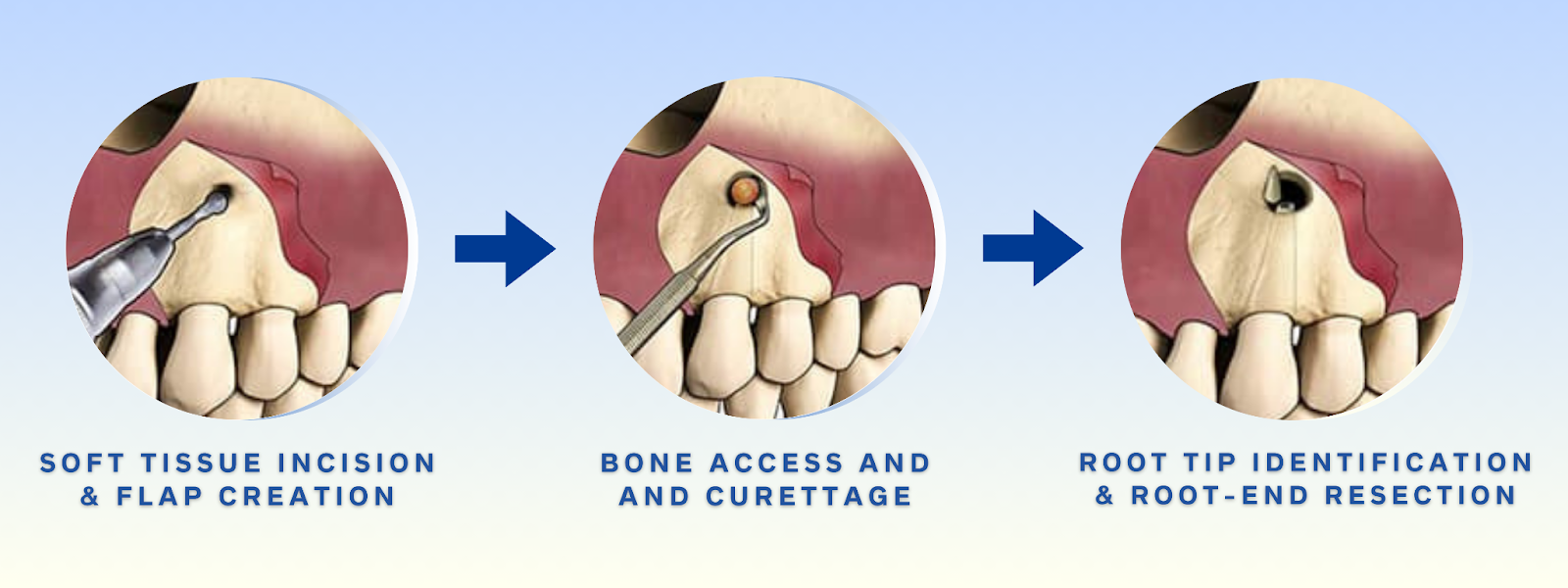
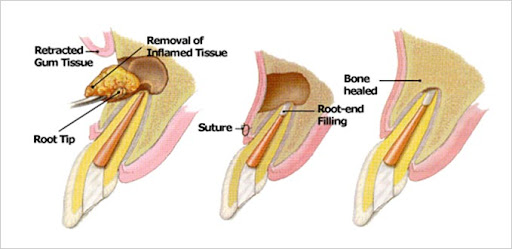
Dr. C makes a small incision in the gum beside the affected tooth, removes the last 2–3 mm of the root tip and any infected tissue, then seals the root end with a biocompatible filling material. The gum is sutured, and your body heals the bone over the following months.
Don't Wait on Persistent Symptoms
Untreated root-tip infection can spread to adjacent teeth, jawbone, or in rare cases reach systemic circulation. If your root canal tooth still hurts or swells, call (972) 276-4888 today.
Signs You May Need an Apicoectomy
Check the situations that apply to you — if you recognize any, call us for an evaluation.
Apicoectomy vs. Your Alternatives
Saving your natural tooth is almost always the best long-term choice — and apicoectomy makes that possible when other options fall short.
| Option | Cost (est.) | Preserves Natural Tooth | Recovery | Long-term Outcome |
|---|---|---|---|---|
| Apicoectomy | $900–$1,800 | ✓ Yes | 1–2 weeks | Lifetime if successful |
| Root Canal Retreatment | $800–$1,500 | ✓ Yes | Few days | May not reach apex |
| Extraction + Implant | $3,000–$5,500 | ✗ No | 3–6 months total | Good, but costly |
| Extraction + Bridge | $2,500–$4,500 | ✗ No (adjacent teeth filed) | Weeks | Stresses adjacent teeth |
| Extraction Only | $150–$400 | ✗ No | 1–2 weeks | Bone loss over time |
What Happens During an Apicoectomy?
A gentle, step-by-step process — completed in a single appointment at Frisco Dental Hub with full local anesthesia so you feel nothing.
Dr. C thoroughly numbs the area around the affected tooth. You remain fully awake and comfortable — most patients feel only light pressure, never pain.
A tiny, precise incision is made in the gum tissue beside the tooth, and the gum is gently folded back to expose the underlying bone and root tip.
The last 2–3 mm of the root (the apex) plus any infected tissue or cyst in the surrounding bone is removed. The area is thoroughly cleaned and examined.
The exposed root canal is sealed with a small biocompatible filling (MTA or similar material) that prevents bacteria from re-entering the canal from the bottom.
The gum is repositioned and sutured closed. Over the next weeks, the gum heals; over months, the surrounding bone naturally regenerates around the sealed root.
Total appointment time: 30–90 minutes
Front teeth (incisors/canines) typically take 30–45 minutes. Premolars and molars with multiple roots can take up to 90 minutes. You can drive yourself home; we'll send you with complete aftercare instructions and an emergency contact.
What to Expect After Your Apicoectomy
Most patients return to work or normal activities within 1–2 days. Full bone healing takes several months — but you won't feel it happening.
Apply ice packs (20 min on/off) for the first 24 hours to minimize swelling. Take ibuprofen or prescribed medication as directed. Soft foods only.
Tenderness and minor swelling gradually subside. Switch to warm salt-water rinses after meals. Avoid hard, crunchy, or chewy foods near the site.
If non-dissolvable sutures were placed, a brief follow-up visit is scheduled 3–7 days after surgery to remove them. Takes less than 5 minutes.
Gum tissue fully heals. You can eat normally and resume all activities. A follow-up X-ray at 6 months confirms bone is regenerating around the sealed root.
Recovery Do's & Don'ts
🚨 Call us immediately if you experience:
Severe or worsening pain after day 3 · Fever over 101°F · Increasing swelling after 48 hours · Sutures coming loose. Dr. C's team is available for post-op concerns at (972) 276-4888.
6 Reasons an Apicoectomy Is Worth It
Natural teeth are irreplaceable. Saving yours with an apicoectomy is almost always more cost-effective and healthier than extraction.
An apicoectomy costs $900–$1,800. Replacing a tooth with an implant runs $3,000–$5,500+. Saving your tooth is almost always the smarter financial choice.
Natural tooth roots stimulate jawbone growth. After extraction, bone volume in that area diminishes over time — apicoectomy prevents this entirely.
No implant or prosthetic looks, feels, or functions exactly like your own tooth. Saving what you have means keeping your natural bite and appearance.
Apicoectomy performed by an experienced clinician succeeds in the vast majority of cases. Most treated teeth remain functional and pain-free for decades.
Unlike implants requiring 3–6 months of staged treatment, an apicoectomy is completed in a single surgical visit with no waiting period between stages.
Root-tip infection left untreated can spread to adjacent teeth, bone, and in rare cases beyond. Apicoectomy eliminates the infection source definitively.
Experienced, Gentle Care — Right Here in Frisco
Dr. Chakrapani Nannapaneni (Dr. C) brings UCSF-trained precision and over 20 years of clinical experience to every endodontic surgery — including apicoectomies — at our Frisco TX practice.
Dr. Chakrapani Nannapaneni, DDS, graduated from the UCSF School of Dentistry — consistently ranked among the nation's top 5 dental programs — and has practiced comprehensive and surgical dentistry for over 20 years. His calm, thorough approach and commitment to explaining every step makes even complex procedures like apicoectomy comfortable and stress-free for patients.
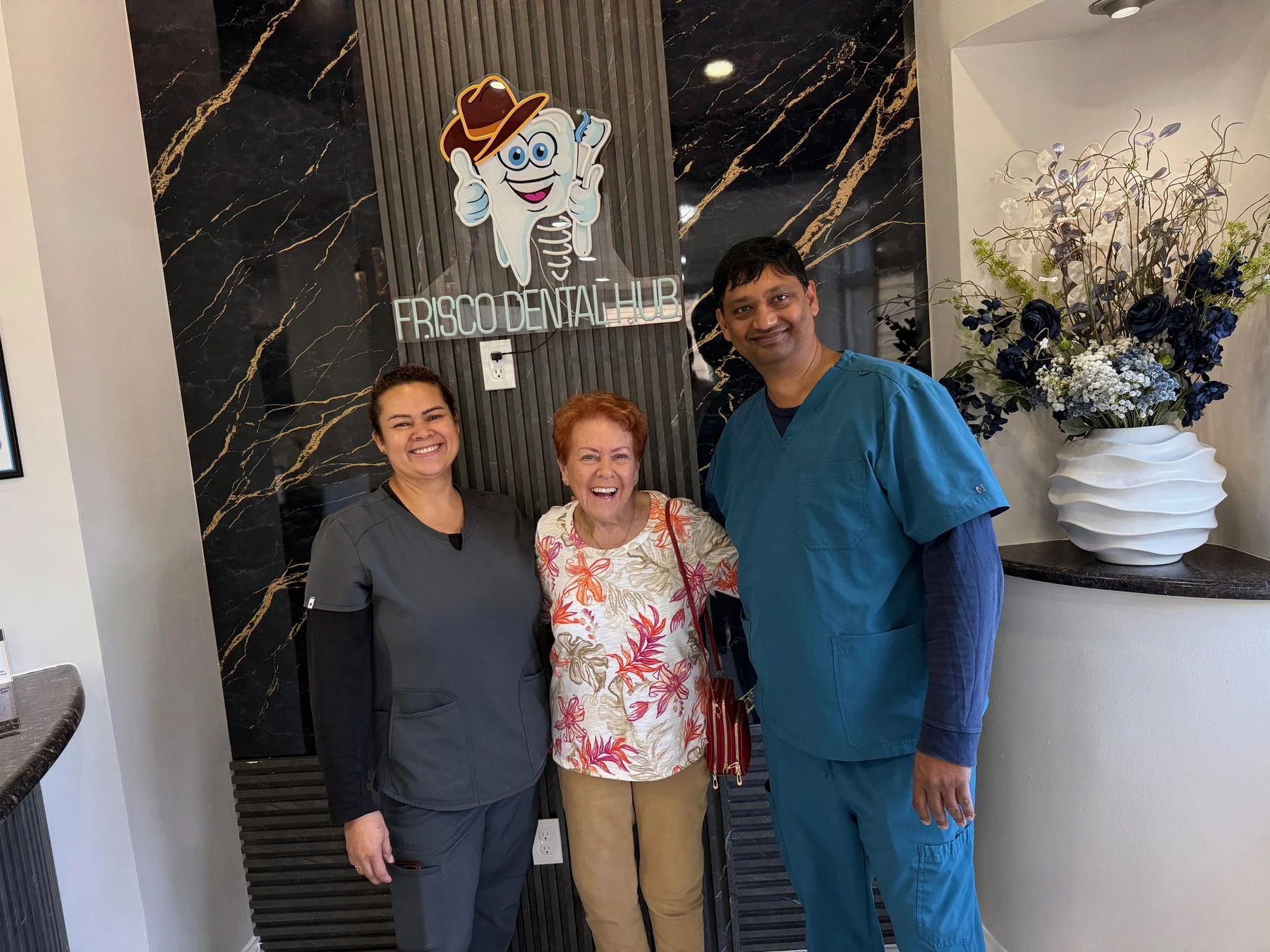
Dr. C earned his DDS from the prestigious University of California San Francisco — one of the nation's top dental schools.
We use 3D CBCT cone-beam imaging to precisely map root anatomy before surgery — improving accuracy and outcomes.
Dr. C explains every step before starting, answers all your questions, and ensures you feel completely comfortable throughout the procedure.
Most PPO plans partially cover apicoectomy. We also accept CareCredit 0% APR financing and HSA/FSA payments to make treatment accessible.
Frisco Dental Hub at a Glance
What Frisco Dental Hub Patients Say
5★ rated on Google with 350+ reviews. Real patients, real results.
"Wonderful dentist very friendly, easy to talk to. They provide great care here and their pricing is fantastic. I am excited to start my teeth straightening journey here. Will recommend!"
"I had a wonderful experience at Frisco Dental Hub. Dr. Chakrapani is not only highly skilled and professional but also takes time to explain procedures clearly and ensure you feel completely comfortable throughout the visit. The staff were equally impressive, friendly and organized. Highly recommend this clinic for anyone looking for quality dental care in a warm and caring environment."
"Dr. C and his team are the best! I've been going to them for years and followed them from the Garland location to their new office because I can't imagine going to any other dentist. They're always friendly, honest, and do great work."
Apicoectomy — Frequently Asked Questions
Everything you need to know before your consultation with Dr. C.
An apicoectomy is a minor oral surgery that removes the tip of a tooth's root (the apex) along with any infected surrounding tissue, then seals the root canal from the bottom. It is performed when root canal treatment or retreatment cannot fully eliminate persistent infection at the root tip. The procedure saves the natural tooth and avoids extraction.
Root canal treatment occasionally fails to fully resolve infection due to calcium deposits blocking canals, unusually curved or narrow roots, fractured root tips, or infection that has spread into the surrounding jawbone. Tiny branches (lateral canals) off the main root canal can harbor bacteria that remain after standard treatment. An apicoectomy directly accesses and clears the source of infection that retreatment cannot reach.
No. The procedure is performed under local anesthesia, so you feel no pain during surgery — only mild pressure. Afterward, most patients experience minor soreness and slight swelling for 2–7 days managed comfortably with over-the-counter ibuprofen and cold compresses. Many patients are surprised by how manageable recovery is.
An apicoectomy typically takes 30 to 90 minutes depending on which tooth is being treated. Front teeth (incisors and canines) are more accessible and take closer to 30–45 minutes. Posterior teeth (molars) with multiple roots may take up to 90 minutes due to their depth and anatomy.
Apicoectomy has a documented success rate of 85–97% when performed by an experienced clinician using modern techniques and materials. Most successfully treated teeth remain functional for decades — in many cases a lifetime. The procedure is considered highly predictable for appropriate candidates.
Most patients return to normal daily activities within 1–2 days after an apicoectomy. Soreness and minor swelling typically resolve within 1–2 weeks. Complete bone regeneration at the surgical site takes approximately 3–6 months, though you won't feel this process occurring. A follow-up X-ray at 6 months confirms healing progress.
Apicoectomy at Frisco Dental Hub typically costs $900–$1,800 per tooth depending on location and complexity. Many PPO dental insurance plans cover a portion of the procedure. This is significantly less expensive than extraction followed by a dental implant ($3,000–$5,500+). Call (972) 276-4888 for a personalized cost estimate.
Without treatment, a persistent root-tip infection does not resolve on its own. Over time it can spread to surrounding bone (causing bone loss), infect adjacent teeth, or develop into a dental abscess. In rare cases the infection can spread systemically. Eventually, the tooth may require extraction — which is more costly and results in permanent bone loss at that site.
Yes — if only local anesthesia is used (standard), you can drive yourself home after the procedure once the anesthesia begins to wear off and you feel alert. If sedation is also administered, you will need a driver. Dr. C's team will confirm this based on your individual treatment plan.
Yes. Frisco Dental Hub at 4500 Hillcrest Rd Suite 190, Frisco TX 75035 provides apicoectomy (root-end surgery) for patients from Plano TX, McKinney TX, Allen TX, Prosper TX, Celina TX, and all surrounding North Texas communities. Call (972) 276-4888 to schedule a consultation.
Apicoectomy Near You — Serving All North Texas
Located at 4500 Hillcrest Rd Suite 190, Frisco TX 75035 — a short drive from anywhere in Collin County and the greater DFW metroplex.
Ready to Save Your Tooth? Request a Consultation.
Dr. C will review your X-rays, evaluate your symptoms, and give you an honest recommendation. Call (972) 276-4888 or fill out the form below — we call within 2 business hours.
🦷 Request Apicoectomy Consultation
Evaluation — Dr. C reviews your case and recommends the best path forward. 🔒
🔒 100% confidential. No commitment. Your information is never shared.
📍 Frisco Dental Hub
Don't Lose Your Tooth — One Appointment Can Save It
Apicoectomy saves natural teeth when root canal treatment isn't enough. UCSF Dr. C · Frisco TX · (972) 276-4888.